Diwali cleaning is a tradition in almost every Indian home. Cupboards are emptied, lofts are cleared, old things come out of corners. A zero-waste Diwali clean-up means making sure that everything you take out goes to the right place, and that as little as possible ends up at the dumpsite.
Why it matters
Festival cleaning can add a lot to that in a single week. Yet most of what we clear out still works.
Sort into five piles
As you clean, make five piles. It's faster than deciding item by item.
Keep: things you use and love.
Give away: things that work but you don't need.
Repair: things worth fixing.
Reuse at home: things that can do a new job.
Recycle or dispose: things that are truly finished.
What to give away
Furniture, small appliances, kitchen items, books, toys, clothes and decor that are in usable condition are wanted by someone close by. A chair you no longer sit on could be a student's study chair. A spare pressure cooker could be a new family's first.
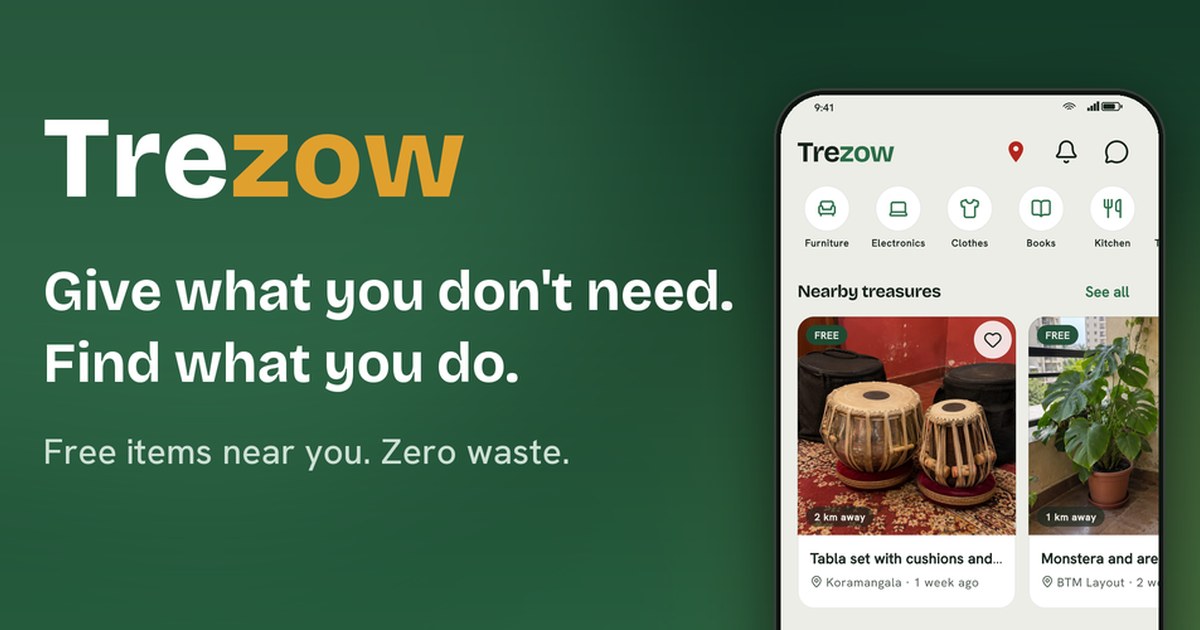
List them for free on Trezow, with honest photos and a clear description. People nearby can request them, and you choose who to give them to. It also saves you a trip: the person collecting usually comes to you.
Tips for giving well:
Clean items before listing them.
Group small things into sets: "5 steel tiffins", "box of kids' books".
Be honest about flaws.
Set a pickup time that suits you.
What to reuse at home
Old saris and dupattas make good curtains, cushion covers or gift wraps.
Glass jars become storage for spices, dry fruit and diyas.
Last year's greeting cards can be cut into gift tags.
Old bedsheets make dust covers for furniture you store away.
Decorations
Lights, toran, rangoli stencils and decorative items can last many years if stored carefully. Before buying new ones, check what you already have. Extra decorations you don't need make a lovely gift for a neighbour, a school or a community hall.
Clay diyas can be cleaned and reused. Broken clay can go into garden soil.
Recycle and dispose properly
Some things cannot be reused.
Paper, cardboard, metal and clean plastic: keep them dry and give them to your kabadiwala or dry-waste collector.
Old electronics: don't throw them away. Give working ones away, and take dead ones to an authorised e-waste recycler. Read where to give old phones and laptops.
Paint tins, chemicals, old medicines and batteries: these are domestic hazardous waste. Keep them separate and ask your local body how they collect it.
After Diwali
The days after Diwali bring leftover sweets, extra gift boxes and packaging. Share sweets while they're fresh. Reuse gift boxes for storage. Flatten cardboard and keep it dry for recycling.
The short version
Sort into keep, give, repair, reuse and recycle.
Give working items to people nearby.
Reuse what you can at home.
Keep hazardous waste separate.
For a full guide, read how to declutter without waste and how to give away furniture.
Frequently asked questions
What should I do with old diyas and decorations?
Clean and store the ones you'll use again, and give the rest to a neighbour or a school. Clay diyas that are broken can go into garden soil.
Where can I give old furniture during Diwali cleaning?
List it on Trezow so someone nearby can collect it. Furniture is one of the most requested categories.
How do I get rid of old crackers or chemicals safely?
Never put them in household waste. Ask your local body about domestic hazardous waste collection.
Sources
Your turn
Have something you no longer use?
Give it away free on Trezow. Listing takes about 30 seconds.
Give an item